
Finding a Table Where All Are Truly Welcome
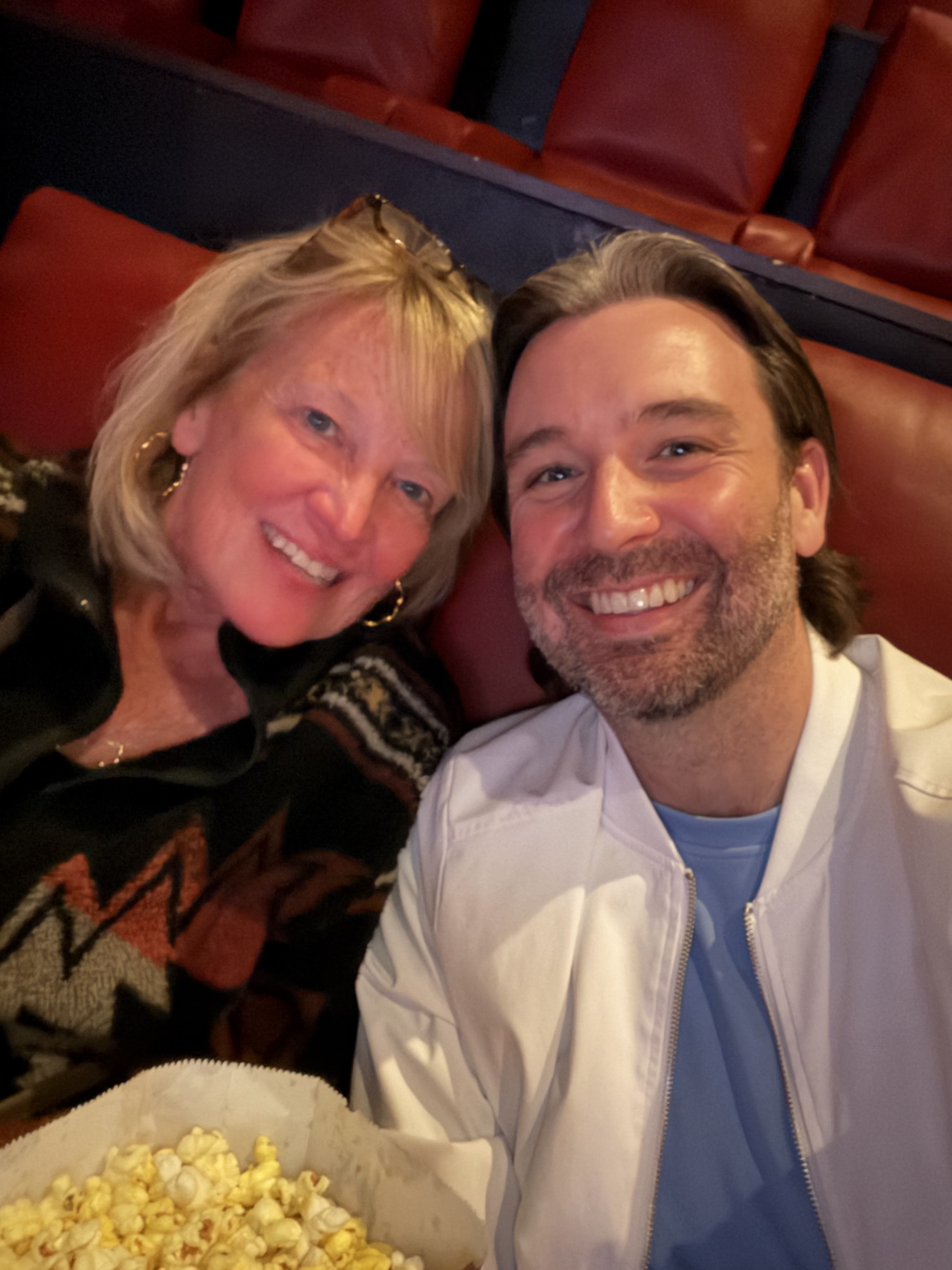

On any given Sunday, I used to stand in church and sing the hymn “All Are Welcome.” I wanted to believe it. I needed to believe it. But over time, those words began to feel less like an invitation and more like a wound - because the table that claimed to welcome everyone did not fully welcome my son, his husband, or families like ours.
This is the story of how a cradle Catholic mother came to question the faith tradition that shaped her life, not because she lost her love for God, but because she could no longer reconcile that love with a church teaching that asked her child to hide, deny, or diminish who he was created to be.
If you have ever struggled to hold onto faith while protecting someone you love, this post is for you. In the paragraphs that follow, I will share what it meant to raise three sons in the Roman Catholic Church, what I wish I had understood sooner about the burden my gay son carried, and why I ultimately found myself searching for a place where welcome meant more than words sung from a hymnal.
I am the mother of three amazing men. My middle son is gay. I have known he was gay from the time he was a very young child. Call it mother’s instinct. And yet, for years, there was an unspoken understanding between the two of us that this part of him would remain hidden from the world. That is something I deeply regret now.
I often think about the hymn “The Summons.” During Mass, when we sang the line, “Would you love the you you hide if I but call your name,” I would reach for his hand. It was my quiet way of trying to say, “You do not need to hide who you are. You are God’s child, made in His image and likeness. He loves you, and He will always call your name.” Looking back, that feels inadequate. Maybe even cowardly. I wish we had spoken more directly. I wish I had said the words out loud. What I did not know then was that while he was attending Sunday school, immediately before the very Mass where I was reaching for his hand, he was being told that homosexuality was a sin.
I learned much later, through conversations with him as an adult, that his takeaway as a child was devastating: the family he loved more than anything - his brothers, his father, and me - would be together in heaven, and he would not. That is an unbearable burden for any child to carry, especially alone, while being too afraid to live his truth out loud. He tells me now that this was a journey he had to live and come through on his own. He tells me I could not have changed exactly what that looked like for him. Still, I will forever regret not being more direct. We did occasionally touch on the subject, and we both laugh now about one of those conversations: I asked, “Do you think you might be gay?” He answered, “I’m 80% sure I am not.” Eighty percent.
There are many reasons someone who is born gay may stay in the closet. But I believe one of the most powerful reasons is organized religion, including the Roman Catholic Church. For my family, the pain was not abstract. It was personal. It came from hearing “all are welcome” while also learning that welcome had conditions.
Over the years, I had many conversations with priests who tried to help me understand (or even tried to justify) the Church’s teachings on homosexuality. One priest told me that many species God created include same-sex pairings. As an avid scuba diver, he said he had witnessed this among underwater creatures. He also shared that some people believe a few of the apostles may have been gay - apostles whom Jesus called to help share His teachings.
The basic teaching of Jesus was, and is, love. That is what made the explanation that followed so painful. This priest told me that my son was welcome in the Church as a gay man, as long as he remained celibate. What? His brothers would not be asked to remain celibate because they were born heterosexual. They could marry, build families, and share their lives in loving relationships. But for my son to receive Communion, he would be expected not to share in that same kind of married love.
To be clear, I respect the priesthood and the vow of celibacy that priests take. But the key word is choose. A priest chooses that vocation. My son did not choose to be gay. He was created by God. He was created as a gay child and became a gay man, beloved and whole.
Another priest listened patiently as I asked why I should continue belonging to a faith tradition I had begun to challenge. His answer was that the Roman Catholic Church is like a very large barge. It may turn, he said, but slowly. Not in his lifetime. Not in my lifetime. Not in my children’s lifetime.
I found that unacceptable. That conversation marked the point when I stopped attending Mass, one of the hardest decisions of my life.
Mass on Sunday had been the one hour each week when I could simply be God’s child. Not someone’s mother, daughter, wife, or nurse. Just God’s child.
And when I looked at my children then, and when I look at them now, the love I feel for them is so profound that there is no word large enough to hold it. Then I think: if I am God’s child, He must love me even more than that. From a mother’s standpoint, that is almost impossible to comprehend.
As a mother, there is nothing any of my children could ever do - and I mean absolutely nothing - that would exclude them from eating at my table. So am I truly supposed to believe that God, whose love is greater than mine, would exclude my child, or any child, from His table?
Enter St. Miriam’s.
St. Miriam’s is an inclusive Catholic parish community in Flourtown, Pennsylvania, just outside Philadelphia. What drew me in was not only that it honors Catholic tradition, but that it does so with an open, affirming spirit. It describes itself as a place for people who have felt unchurched, alienated, forgotten, or pushed to the margins - and that language mattered to me because I knew what it felt like to love someone who had been made to feel that way.
What I heard in St. Miriam’s mission was a message my family needed: God’s love is not conditional, and people do not have to arrive perfect, polished, or approved by everyone else before they can belong. The parish emphasizes dignity, welcome, and full participation in worship and sacramental life. In other words, it is not simply saying “come in.” It is saying, “You are already beloved. There is room for you here.”
St. Miriam’s is part of the Old Catholic tradition, which is distinct from the Roman Catholic Church but still rooted in Catholic sacramental life and history. For someone like me, that distinction mattered. It meant I did not have to abandon the beauty, rhythm, and sacredness of the Catholic faith that had shaped me. I could still find liturgy, Eucharist, prayer, and community - but in a place where welcome did not stop at the door.
Most importantly, St. Miriam’s speaks of Communion as food for the journey and opens the table to those who wish to participate in the life of the parish. That image stayed with me. After years of wrestling with whether my son would be fully welcomed at God’s table, I found myself drawn to a community that treated the table not as a reward for conformity, but as nourishment for all who are seeking God.
For me, St. Miriam’s represents the hope I had been searching for: a place where the words “all are welcome” are not a performance, but a promise. A place where my son, his husband, and our whole family can be seen not as exceptions to be managed, but as beloved children of God.
I did not leave the Roman Catholic Church because I stopped believing in God. I left because I could not continue to sit at a table where one of my children was welcomed only if he denied the fullness of who he is. My faith did not disappear. It changed shape. It became less about obligation and more about love, less about rules and more about the radical welcome Jesus lived.
And that is the table I want to visit. That is the table I want for my children. That is the table I believe God has always been setting.
Wow, Terri. How powerful. I’ve struggled myself with my faith and religion in general for similar reasons. I always had a hard time reading the teachings of Jesus in church, then looking up to see a congregation that did not scream acceptance but unspoken standards or lifestyles that I was expected to adhere to.
I was especially moved by this sentence: “After years of wrestling with whether my son would be fully welcomed at God’s table, I found myself drawn to a community that treated the table not as a reward for conformity, but as nourishment for all who are seeking God.”
I’ve never been able to put to words the issue I have with organized religion. Maybe I stopped…
Terri, thank you for this post. What a moving story. I am so sorry that all of you, especially Jared, went through this. I am so happy that you’ve found a church that lives like Jesus did. Jesus was about love, pure and simple.
I’ve always admired the closeness you and your kids and their families share. That is a huge credit to you. I know about mama-regret (something I’d like to chat about sometime). It’s really hard to forgive ourselves, isn’t it?
I’m so proud of you for starting this blog. It will be helpful to more people than you know. ❤️